
Healing Beyond Borders
A new partnership shows UH medical students compassionate care has no boundaries


Inside the gleaming halls of the University of Houston’s Tilman J. Fertitta Family College of Medicine, future physicians are on the cutting edge of technology and innovation — every tool, from digital anatomy tables to virtual surgery modules, is designed to prepare them for the rapidly evolving world of modern medicine.
It’s not quite the same at the University of Ghana Medical School — the nation’s largest and one of Africa’s most respected medical schools — where some facilities are state-of-the-art while others are more basic with few bells and whistles. What thrives there is something technology can’t replicate: a culture of compassion, resilience and community-rooted care.
And that’s something the two schools have a lot in common — a strong belief that medicine is deeply personal and grounded in human connection. And when students from both schools met for the first time in Ghana this summer, the experience was more than a lesson in global health. It was a reminder of why they chose this path in the first place.


“Global health isn’t about crossing borders, it’s about breaking barriers. By understanding how health systems operate in different parts of the world, our students become stronger researchers, clinicians and advocates — wherever their careers take them.”
—Lola Adepoju, UH Tilman J. Fertitta Family College of Medicine


Forging a New Partnership
What began as an academic exchange between two medical schools 6,000 miles apart became a partnership with purpose — a shared mission to advance global health education, foster culturally competent care and recognize that diseases know no borders.
“This partnership is about building a new generation of physicians who can provide compassionate care anywhere — whether that’s in a rural Texas clinic or a hospital in Ghana,” said Lola Adepoju, health services researcher and clinical associate professor at the Fertitta College of Medicine. “When you learn to deliver care in low-resource settings, you gain the adaptability and empathy every great doctor needs.”
The UH delegation that visited Ghana for a week in July, with students and faculty from the Fertitta College of Medicine, the Graduate College of Social Work and Cullen College’s Department of Biomedical Engineering, immersed itself in every layer of Ghana’s health system — from the bustling wards of Korle Bu Teaching Hospital in Accra to the humble exam rooms of Danfa Clinic, a rural outpost in the Aburi Hills.


Lola Adepoju, UH Tilman J. Fertitta Family College of Medicine, in Ghana
Lola Adepoju, UH Tilman J. Fertitta Family College of Medicine, in Ghana

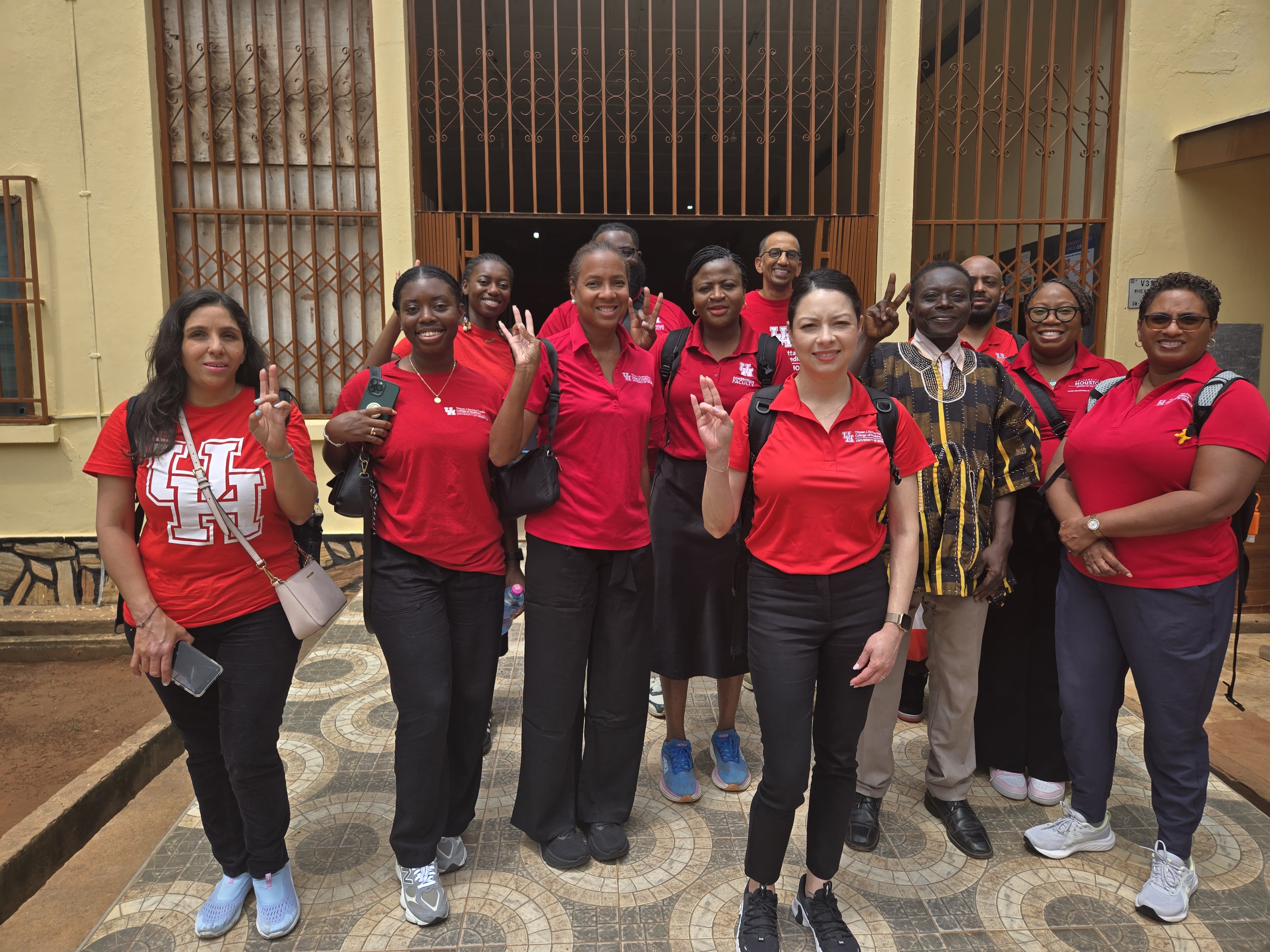
University of Houston delegation in Accra, Ghana
University of Houston delegation in Accra, Ghana
This was the first step in what both sides hope is a long-standing collaboration rooted in reciprocity — a commitment to shared learning and mutual growth.
“The vision is truly bidirectional — not just UH students going to Ghana, but Ghanaian students and faculty coming here,” Adepoju said. “Both sides have something invaluable to teach. It’s about mutual learning, mutual respect and building solutions that transcend geography.”


University of Houston delegation at Korle Bu Teaching Hospital in Accra, Ghana
University of Houston delegation at Korle Bu Teaching Hospital in Accra, Ghana
Lessons from Ghana
Ghana’s health system is widely considered the best in west Africa — and one of the best in all of Africa. But it falls in the bottom half of health systems around the world.
According to the Global Health Security Index, Ghana ranks 104th out of 195 countries, with below average scores for disease prevention, detection and reporting, and rapid response. There is also a higher than average risk environment, characterized in part by infrastructure gaps and socio-economic constraints. Tuberculosis and malaria, among the most preventable diseases in the world, are two of the leading causes of death in Ghana, along with stroke and heart disease.
“Seeing Ghanaian providers deliver world-class care with so few resources was humbling. It reminded all of us that medicine is about human connection first,” Adepoju said. “Our students came home with a renewed sense of purpose — to serve, to listen and to lead where they’re needed most.”
At Korle Bu, the team joined clinical rounds where they met children with malaria and sickle cell disease, adults battling meningitis and kidney disease, and expectant mothers in Pregnancy School, a community-based prenatal program that empowers women and strengthens families.
For Yole Odharo, a fourth-year medical student at the Fertitta College of Medicine, the experience was deeply meaningful and inspiring.
“As an immigrant from Nigeria, my early struggles with access to quality healthcare shaped both my path toward medicine and my passion for global health,” Odharo said. “The exchange in Ghana broadened my perspective and renewed my resolve to pursue a career that bridges local and global healthcare, and it reminded me that medicine is not only about knowledge and technology but also about resilience, creativity and the will to serve.”


Photo by Yoel Winkler on Unsplash
Photo by Yoel Winkler on Unsplash
Leading Causes of Death in Ghana
· Stroke
· Heart Disease
· Malaria
· Tuberculosis


World Health Rank
· 104 out of 195 countries


Below Global Average:
· Disease prevention
· Detection and reporting
· Rapid response
Above Global Average:
· Risk environment
· Political and security factors
· Infrastructure
· Socio-economic resilience
A Broader Perspective
Back in Houston, the lessons from Ghana continue to resonate. For the students and faculty who made the journey, the experience reshaped how they see their role as physicians — not only as healers, but as advocates, innovators and bridge-builders across cultures.
“We want our students to see health care through a broader lens — to understand how culture, access and context shape care,” Adepoju said. “That awareness makes them better physicians in Houston, one of the most diverse cities in the nation, and better global citizens overall.”
The partnership in Ghana is just the latest example of the Fertitta College of Medicine’s growth as a truly global institution. For the past several years, students and faculty have provided care in rural communities in Honduras. And earlier this year, the College signed a memorandum of understanding with a medical school in Nepal, paving the way for joint research and faculty development and, eventually, student exchanges.
“When students immerse themselves in other cultures, they develop empathy, adaptability and a deeper understanding of health care beyond our borders,” said Dr. Jonathan A. McCullers, UH vice president of health affairs and dean of the Fertitta College of Medicine. “Working abroad in places like Ghana not only strengthens their problem solving skills but also equips them to better serve patients in underserved communities at home. These opportunities reflect our commitment to shaping globally minded physicians who can lead with perspective and compassion.”
In an era when medicine is increasingly defined by data and technology, the partnership between UH and the University of Ghana serves as a powerful reminder that progress in health care is ultimately human. For these future physicians, the path forward — whether in Texas, Ghana or anywhere in between — is guided by compassion, curiosity and a commitment to serve.
“Trips like this remind you why you chose medicine in the first place,” Adepoju said. “You see people doing so much with so little, and it reignites your commitment to service. Our students returned with humility and gratitude — and a deeper understanding of what it means to care.”

The UH delegation in Accra, Ghana.
The UH delegation in Accra, Ghana.


Dr. Lani Ackerman, Fertitta College of Medicine, with medical students in Nepal.
Dr. Lani Ackerman, Fertitta College of Medicine, with medical students in Nepal.

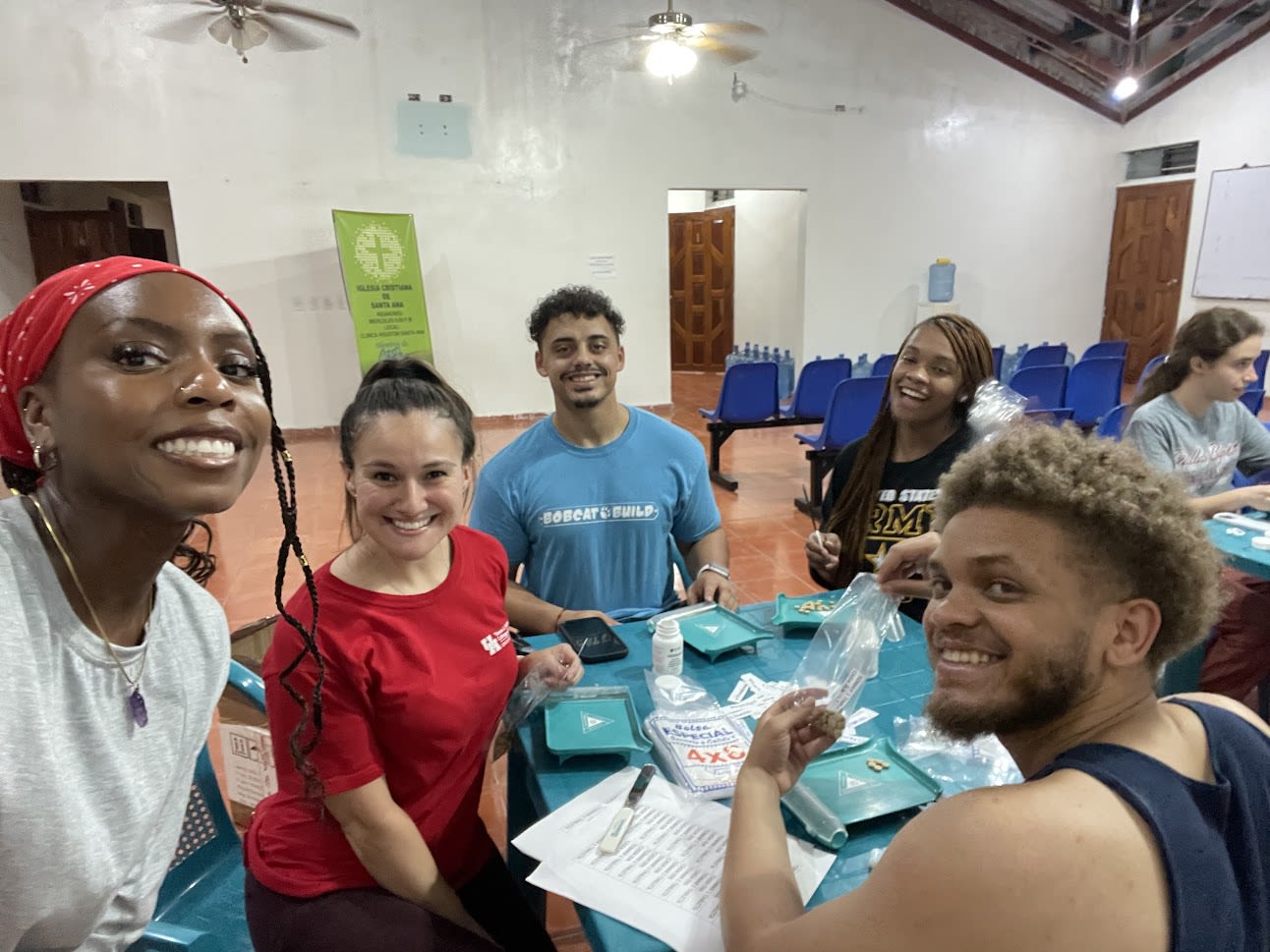
Fertitta College of Medicine students filling prescriptions at a clinic in rural Honduras.
Fertitta College of Medicine students filling prescriptions at a clinic in rural Honduras.

 Built with Shorthand